Vegetarian Hot Pot
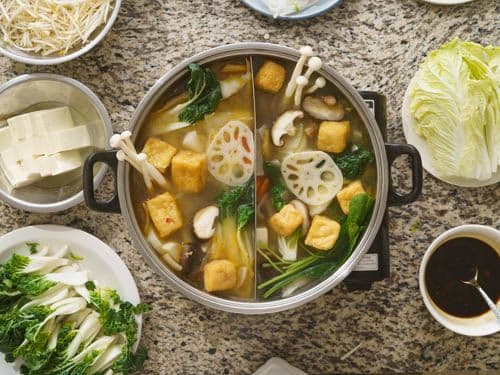
Packed with nutritious veggies, this cozy, comforting meal is perfect on a chilly winter day!

Cooking Summary
Ingredients: (detailed list)
- Soup Base Ingredients: ginger, onion, carrot, daikon, oil, cooking wine, boiling water, salt, sugar, chili sauce
- Hot Pot Ingredients: napa cabbage, lotus root, bok choy, seafood mushroom, fresh shiitake mushroom, soft tofu, vermicelli, beansprout, fried tofu puff, spinach, fresh rice noodle
- Dipping Sauce Ingredients: vegetarian oyster sauce, light soy sauce, rice vinegar, sugar, chili sauce, boiling water
Jump To Section
Top 3 Mistakes
- Cooking all vegetables alike:
Give slower ingredients such as lotus root and mushrooms more time than quick-cooking spinach. Watch each addition instead of leaving all the vegetables in the broth for the same interval.
- Keeping the boil too fierce:
Turn down the heat when the recipe moves to a simmer. A hard boil changes how quickly liquid evaporates and how gently the ingredients cook, so follow that change in heat.
- Handling soft tofu too roughly:
Cut the soft tofu into the small rectangles described and handle them gently. This ingredient is not a firm vegetable, so avoid treating it as something to squeeze or roughly stir.
Overview
When it's cold outside and you're craving something light after one too many heavy winter dinners, there's no better meal than vegetarian hot pot. We previously shared our Ultimate Hot Pot Guide, which goes into great detail about the communal dining experience and includes my dad's recipes for homemade fish balls and sliced meat. This time around, we're lightening things up with a vegetarian hot pot recipe that's equally cozy and comforting.
This interactive meal — which allows everyone to cook their own food at the table — requires a bit of prep work, but once the veggies are washed and chopped and the soup base is done, it's time to eat!
An expert chef's tip for the best vegetarian hot pot
Hot pot soup bases are now available at many Asian supermarkets, but a homemade one is far tastier and more nutritious. Not only do you have total control over the ingredients, but you can decide how intense the flavor will be, whether to add spice and so on. My dad cooks a Cantonese-style broth, which is lighter than the fiery, mouth-numbing soup bases found in Sichuan.
How to hot pot like a pro
- Keep the soup at a simmer so it doesn't evaporate too quickly. If a lot of ingredients have been added, you can increase the temperature to cook the food, then dial it back down.
- Certain ingredients, like lotus root and mushrooms take time to cook, while others, such as spinach, are ready in a minute or two. Keep a close eye on things so they don't overcook!
- Save the noodles for the end so you don't fill up on carbs. Noodles will also release starch into the broth as they cook, which can thicken the soup base.
- The best part of hot pot is how customizable it is! Use all of the ingredients featured in this recipe or choose a few of your favorites and add whatever else you feel like eating.
Essential hot pot gear
If you plan on doing hot pot regularly, then we recommend investing in a few pieces of essential equipment:
Ingredients
Why this recipe
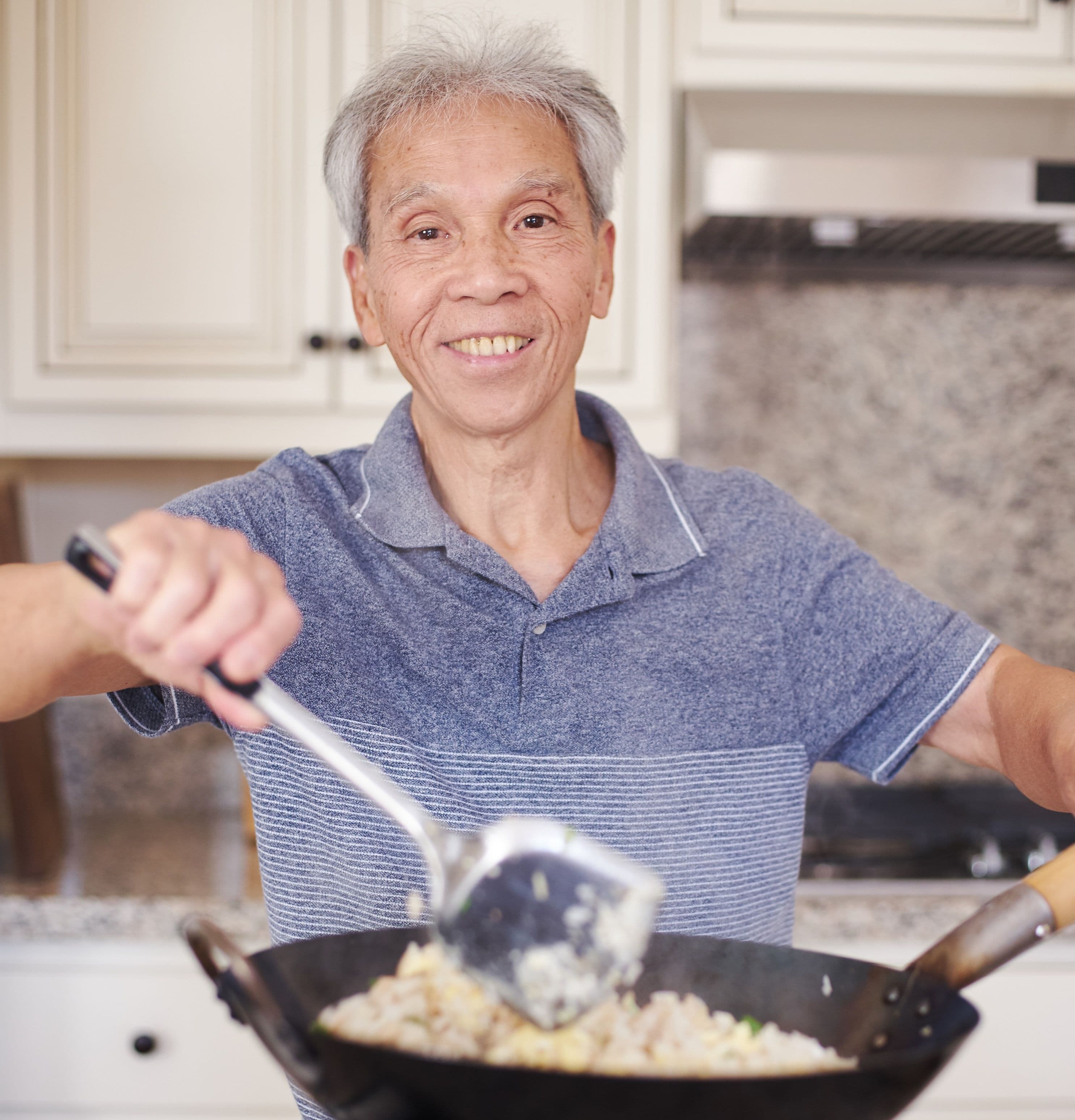
Most vegetarian hot pot recipes online are tested only a handful of times. My dad used to make this dish multiple times a day, every day, for 60+ years and can make this in his sleep.
I know you'll love it as much as our community does! This recipe has over 232.6K views, 4.7K likes on YouTube.
On vegetarian oyster sauce
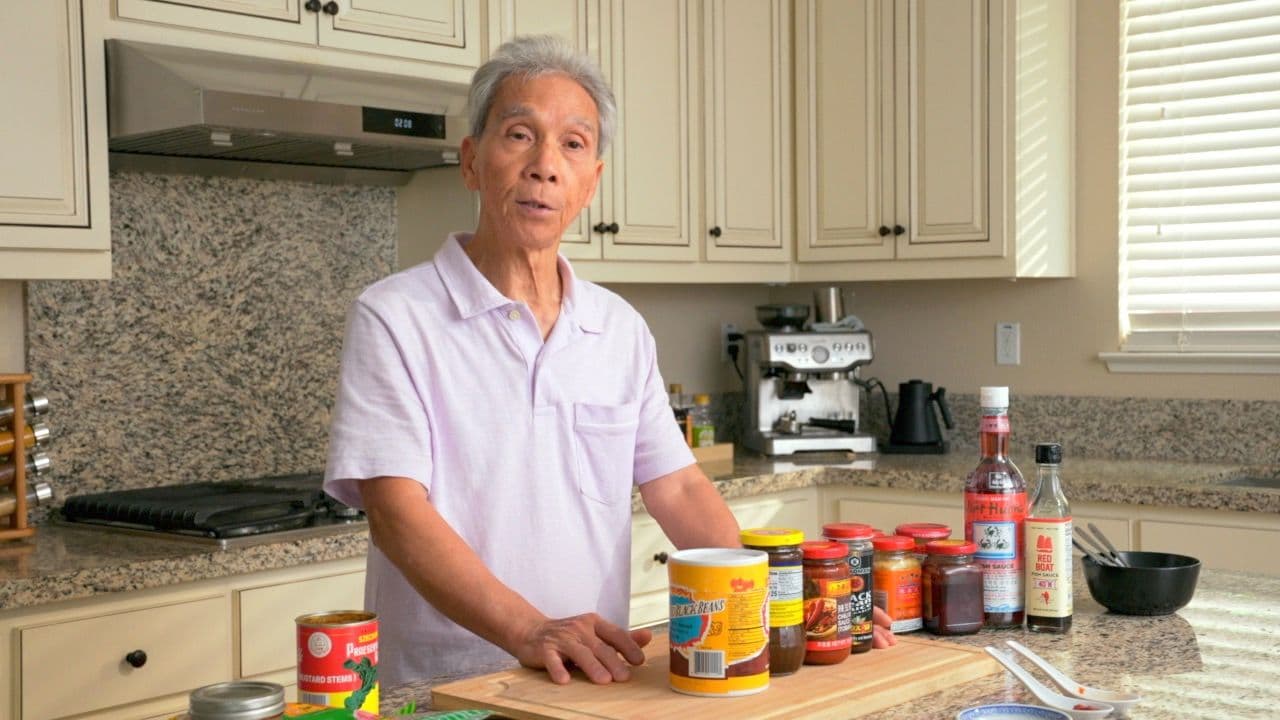
To make this a truly vegetarian recipe, my dad uses a seafood-free oyster sauce alternative in the dipping sauce. Feel free to use regular oyster sauce if preferred, but if you're looking for a vegetarian version, try these brands:
How to make Vegetarian Hot Pot
Clean the ginger (2 oz) and cut into thin slices.
Angle your knife and cut the onion (4 oz) into wedges.
Slice the carrots (6 oz) at an angle into 1/2-inch thick coins.
Place the daikon (14 oz) vertically in front of you and slice in half lengthwise. Next, place the flat side on the cutting board and cut into 3/4- to 1-inch thick pieces.
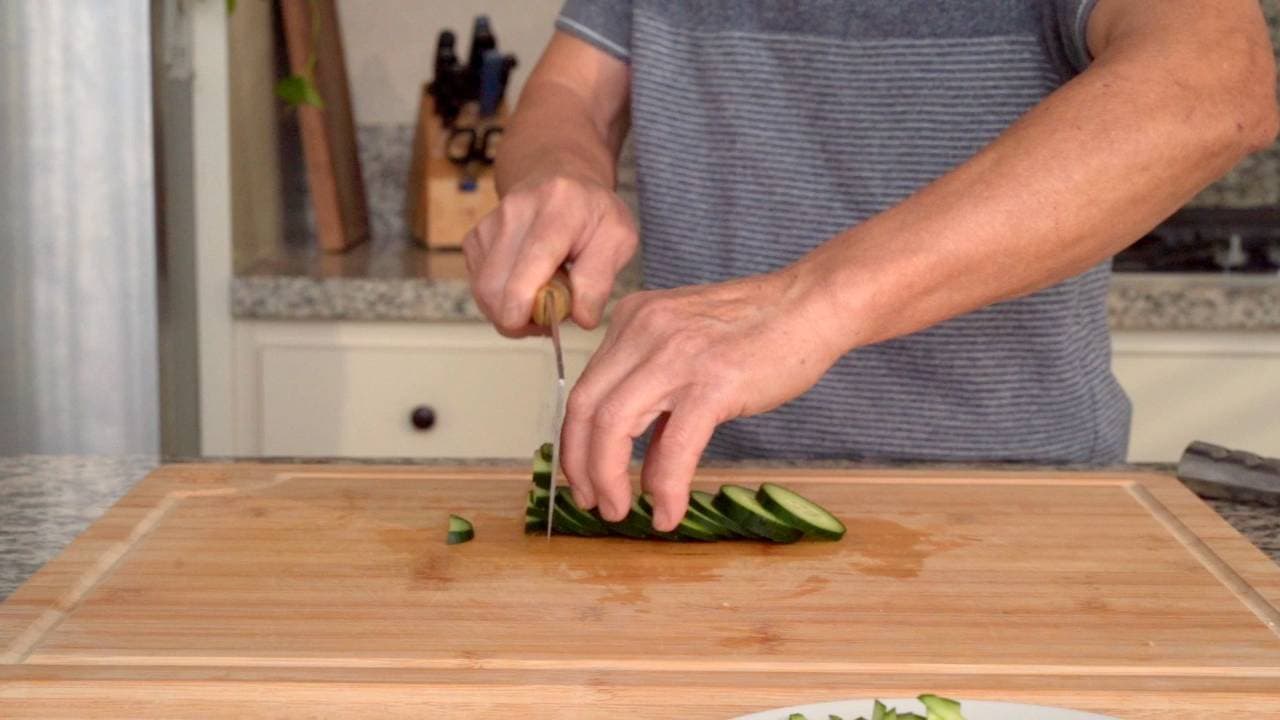
Trim the stem horizontally off the napa cabbage (6 oz) and slice it into smaller pieces. Next, cut the leafy parts lengthwise into long narrow pieces.
Thinly slice the lotus root (8 oz) in 1/8-inch thick pieces. Soak the slices in a bowl of water for 5 minutes. This helps remove any excess starch.
Peel apart the individual leaves of the bok choy (6 oz). Stack the outer leaves on top of one another and cut in half lengthwise. Slice the smaller middle parts lengthwise as well.
Trim off the ends of the seafood mushrooms (6 oz).
Drain the lotus root that were previously soaking and use the same bowl to soak the mushrooms in water for 5 minutes.
Use shears to cut the stems off the shiitake mushrooms (8 oz) and soak all the pieces, including the stems, in water for 5 minutes.
Remove the soft tofu (1 lb) from packaging. Drain out the liquid and rinse tofu with water. Cut the block into thirds lengthwise, then rotate it 90 degrees. Slice it into sevenths the other way, resulting in 21 smaller rectangles of tofu.
Remove the vermicelli (6 oz)from the packaging and soak the bundles in warm water for 10 to 15 minutes to soften the noodles.
Remove the seafood mushrooms from the bowl of water.
Wash the shiitake mushrooms and remove from the water. Cut each mushroom into thirds at an angle.
Soak beansprouts (4 oz) in water for 5 minutes. Drain from water and set aside with other ingredients.
In a small bowl, combine the vegetarian oyster sauce (3 tablespoon), light soy sauce (3 tablespoon), rice vinegar (1 tablespoon), sugar (2 tablespoon), and chili sauce (1 teaspoon). Add the boiled water (2 tablespoon). Stir until well combined.
Heat a wok on high heat. Add the oil (1 tablespoon), followed by the ginger and stir fry for about 1 minute.
Add the onions and stir fry for 1 minute.
Add the sliced carrots shiitake mushroom stems and quickly stir fry for 30 to 40 seconds.
Add the sliced daikon and stir fry for 1 minute, tossing to mix everything together.
Pour in the cooking wine (1 tablespoon) and stir fry for another 30 to 40 seconds.
Add in boiling hot water (10 cup), cover and bring it to a boil. Simmer for 10 minutes.
Transfer the soup base to a hot pot with divider. Season each side with half of the salt (1 teaspoon) and sugar (1 teaspoon). Top the pot off with more hot water if needed. Mix in the seasonings and cover to simmer for another 5 minutes.
Add chili sauce (1 teaspoon) (or any desired spices and seasoning) to one side of pot.
Drop ingredients into each side, including some (but not all) lotus root, tofu, shiitake mushrooms, fried tofu puffs (6 oz) and napa cabbage stems. When almost ready to start eating, add some bok choy.
Move the pot and stove to your dining table. Start cooking and eating by adding ingredients as you go.
These Ingredients cook really quickly, so add in small amounts:
- Spinach (4 oz)
- Bok choy
- Seafood mushroom
- Beansprouts
Save these Ingredients for the end of the meal:
- Vermicelli
- Fresh rice noodles (8 oz)
Frequently Asked Questions
How much food do I need per person?
It all depends on everyone's appetite, but my dad suggests 4 ounces of vegetables per person as a starting point. If you plan on having meat, he estimates 300 grams (about half a pound) for each diner.
Do I need to get a hot pot pot?
A divided hot pot pot allows you to have two different broths as once, but if you don't have one available, you can use a rice cooker or Instant Pot in a pinch. Check out our guide here!
What kind of noodles can you cook in hot pot?
Any noodle you like! Rice noodles like the vermicelli my dad uses here is great, as are egg noodles and wheat noodles. It all really depends on what you prefer.
What's the best dipping sauce for hot pot?
This recipe includes my dad's favorite vegetarian dipping sauce, but again, you can totally customize it to your taste and dietary needs. Add more chili sauce if you want a stronger kick or leave it out completely if you're sensitive to spice.
Pairs well with
View all →
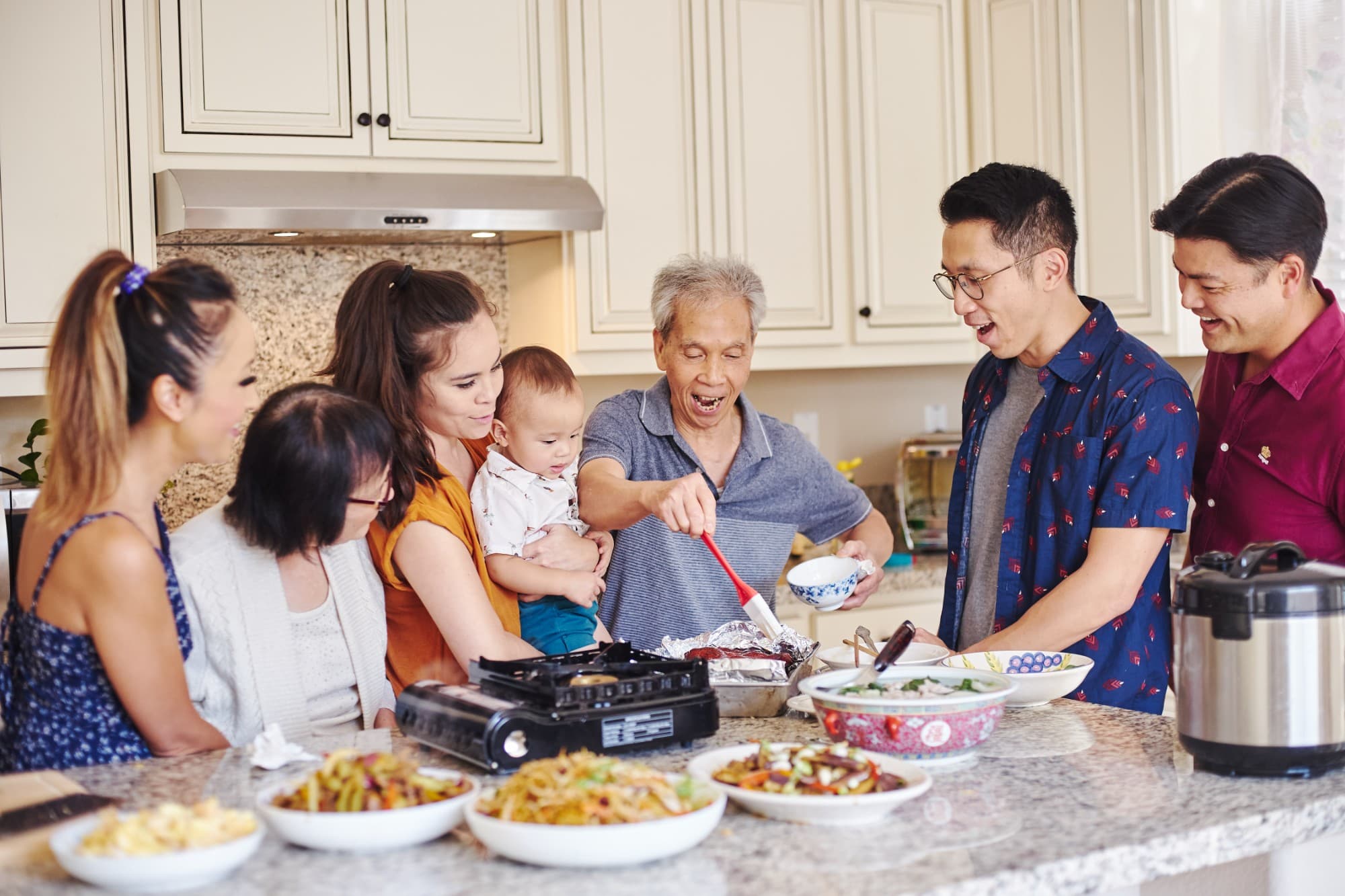
Made with love ❤️
We started Made With Lau to celebrate Cantonese culture and honor the legacy of our wonderful parents, Jenny and Chung Sun Lau.
Our hope is that these recipes and stories help you spread the joy, love, and nostalgia that I felt growing up.