Steamed Fish with Ginger & Scallion

The must-have recipe for your classic Cantonese homestyle meal!

Cooking Summary
Ingredients: (detailed list)
- Main Ingredients: tilapia, ginger, green onion, cilantro, oil
- Sauce: light soy sauce, dark soy sauce, cooking wine, white pepper, water, sugar, salt, sesame oil
Jump To Section
Top 3 Mistakes
- Keeping the steaming juices:
Pour away the liquid collected during steaming and remove the cooked ginger before finishing the fish. Add the fresh ginger and scallions, hot oil, and prepared sauce afterward.
- Leaving ingredients too wet:
Drain and dry the ingredients as directed before they reach the pan. Extra water changes how they cook, making it harder to get the browning and texture the recipe calls for.
- Starting with cold steam:
Bring the steaming water to the state specified before adding the dish. Starting too early changes the cooking time, so establish the steam before you begin counting minutes.
Overview
The centerpiece of a classic Cantonese meal! A whole fish, complete with head and tail, may look intimidating, but it's in fact very meaningful and not difficult at all.
If you're not used to handling fish that's still, well, fish-shaped, don't worry. Just follow Daddy Lau's straightforward instructions step-by-step. It'll only take few times of making this fantastic recipe to get comfortable. Soon, whole fish will be a regular item on your grocery list.
This dish boasts a delicate and simple flavor that's just right for all ages. Part of why it's a Cantonese classic is because it's a nutritious, refreshing dish that's super easy on the stomach.
Ingredients

Why this recipe
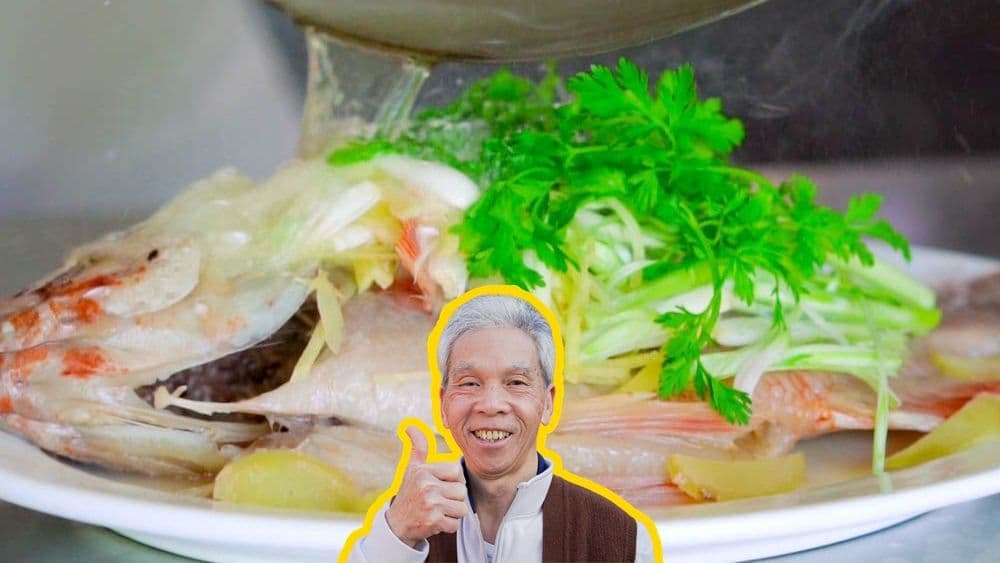
Most steamed fish with ginger & scallion recipes online are tested only a handful of times. My dad used to make this dish multiple times a day, every day, for 60+ years and can make this in his sleep.
I know you'll love it as much as our community does! This recipe has over 510.3K views, 6.3K likes on YouTube.
The best fish for steaming
We typically steam tilapia. In our recipe video, we steamed red tilapia.
This steamed fish recipe also works with striped bass, flounder, and red snapper. No adjustments are needed! If you're steaming a smaller fish, then you can reduce the steaming time. If the fish is on the larger side, then don't forget to make that cut along the back of the fish to allow for even steaming.
Fishy fishy
A major reason why people may avoid cooking seafood at home is because of how fishy it can smell, or taste, like a sketchy seafood aisle. There are several key points in this recipe that help to combat that!
First, you'll want to buy the best quality fish you can find. The fresher the fish, the less fishy it'll be. Quality fish won't smell at all!
We can reduce fishiness as we prepare the fish:
- Make sure the guts are gone! When we buy fish, it's typically already gutted and de-scaled. If it's not, you can ask someone at the seafood counter for help.
- Remove parts and bits that contribute to a fishy taste and smell; namely, the belly and any dried blood.
- Rinse the fish with clean water to really get rid of fishy remnants.
We also fight fishiness with specific ingredients:
- Ginger, green onion, and cilantro are all aromatics that help combat fishiness. We never skip ginger when we make fish!
- Cooking wine and white pepper are also important ingredients that reduce fishiness.
How to make Steamed Fish with Ginger & Scallion
First, prepare the tilapia (1.5 lb) (ours was already gutted and de-scaled when we bought it; if yours wasn't, make sure to do that!):
- Cut away the belly fat. It's softer and spongier in texture than the rest of the flesh. Removing it will greatly reduce the fishiness.
- Scrape away the dried blood from the bones, particularly from the spine.
- Rinse the whole fish with clean water, paying attention to rinse the inside to get that bloody residue off.
- Pat dry with paper towels.
- Cut off the side fins from both sides.
- Make a long cut along the back of the fish. This will help the fish cook more evenly because the back of the fish is thicker than the belly; the cut will allow steam and heat to penetrate that thicker side better.
Place the fish in a dish that'll fit into your steamer set-up.
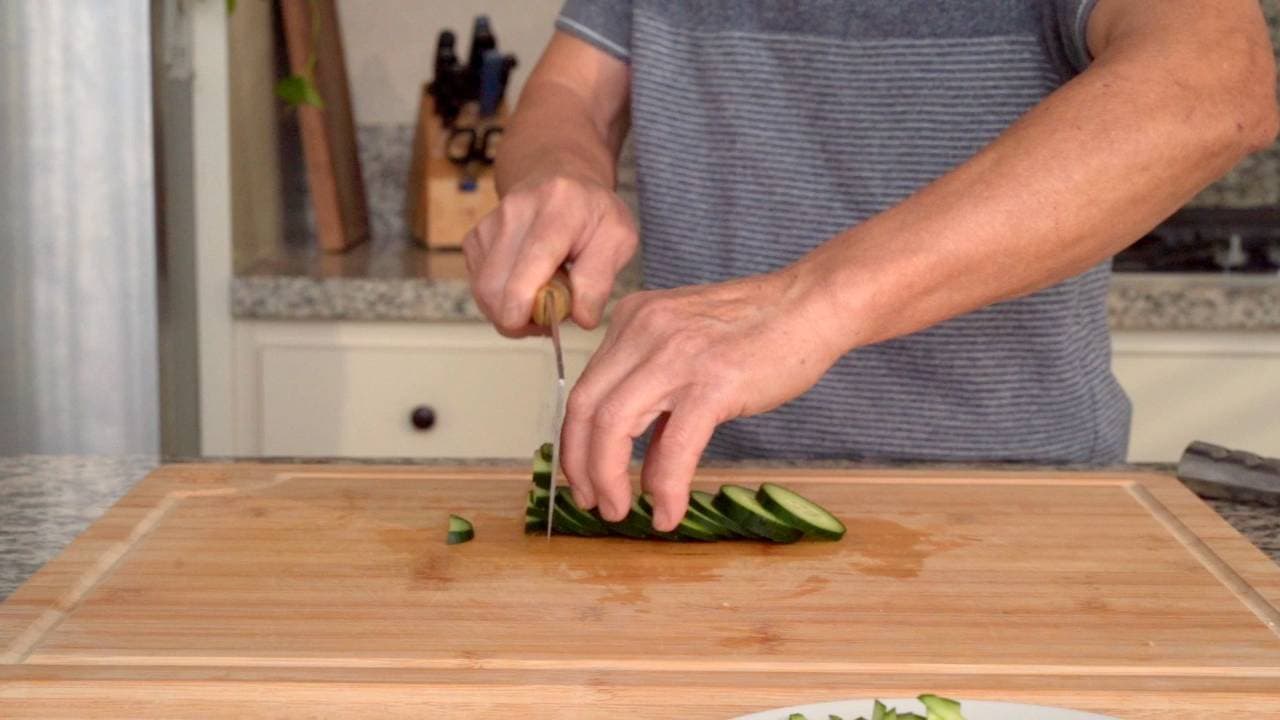
We'll be cutting ginger (1 oz) into two different shapes to use in two different places.
With half the ginger, cut thin slices, then julienne those slices into very fine strips. Put them aside; we'll come back to them at the end.
Cut the green onions (5 stalk) into 3 segments (so we end up with medium-length batons) and put aside the green tops.
With the other half of the ginger, cut into thin slices, and then cut thsoe slices in half. Place those slices along the top of the fish, in a line from head to tail.
The bottom/middle parts of the green onion (that we didn't set aside), we'll carefully shop them lengthwise into fine strips. It's easier to cut them in half first, so they'll lay flatter, and then cut the strips.
Lay the green parts that we set aside under the fish. This way, as they heat up and steam, they'll impart their flavor up into the fish.
Make sure to wash your cilantro (5 piece) now, to make sure it's clean of sand and dirt.
In a small bow, mix together light soy sauce (2 tbsp), dark soy sauce (0.50 tsp), cooking wine (0.50 tbsp), white pepper (0.25 tsp), water (1 tbsp), sugar (0.50 tsp), and salt (0.50 tsp).
Get your steaming set-up ready; ours is a steamer rack in a wok. Boil water in (or add boiling water to) the wok, enough water to nearly reach where the dish will sit, although it doesn't need to touch the dish.
When the water is fully boiling, place the dish with the fish (the fish dish, if we may) onto the steamer rack. Cover with a lid and let it cook for 12 minutes on high heat.
If your fish is smaller, it may finish cooking in 10 minutes.
A good indicator of when the fish is ready is the eyes turning white!
When it's finished, turn off the heat and carefully remove the fish dish from the steamer. Pour out the fish juices into a bowl (some people like to drink this) and remove the ginger.
Place your finely sliced strips of ginger and green onions on top of the fish.
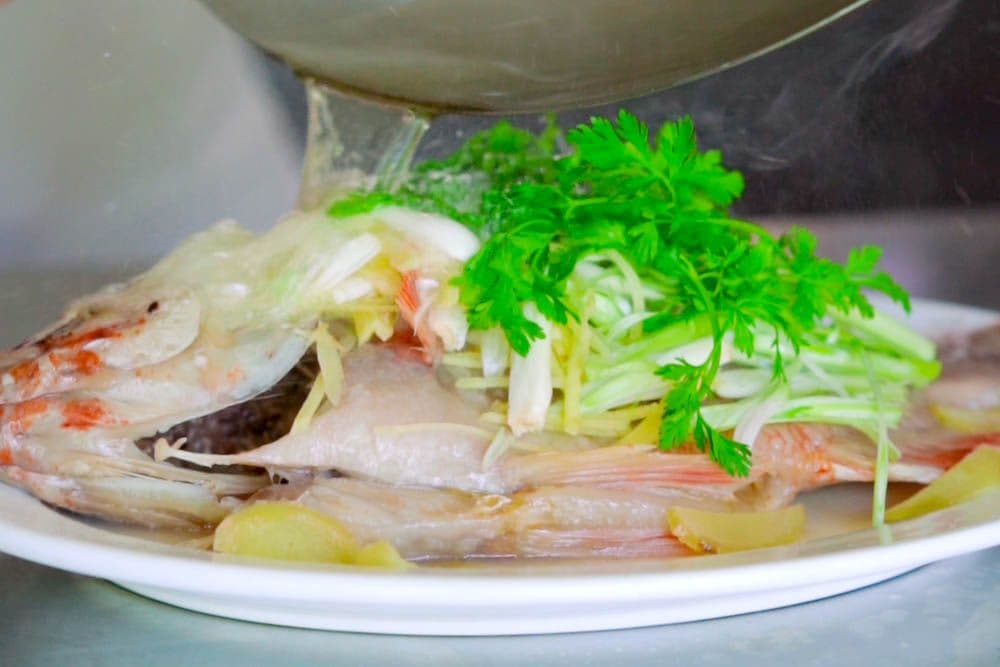
Heat oil (2 tbsp) on high heat for about 1 minute, or until shimmering. Then, carefully pour the oil over the fish. Enjoy the sizzle! You can aim for the ginger and green onions to help them bloom; they'll be super aromatic.
Daddy Lau's pro-tip: wipe the oil from the edge of your wok or pot right after you finish pouring, to keep it from dripping down the underside of the wok. This will make clean-up way easier later.
Garnish with cilantro, sesame oil (1 tbsp), and that delicious sauce we mixed up!
Frequently Asked Questions
How do you choose a good quality fish at the store?
There are three main things you can look out for when buying fish:
1. Look inside the gills and evaluate the color. If it's bright red, that's fresh. If it's dark and oxidized, then that fish has been sitting out for a while.
2. Feel the texture. If you can, press down on the flesh of the fish. If it springs back, that's good! If it simple gives and stays indented, then it's not as fresh.
3. Look at the color of the eyes. Fresh fish will have clear, dark pupils. Avoid fish with white, cloudy eyes.
Check out our short video for Daddy Lau's best tips in action!
What kind of fish can you steam?
We typically steam tilapia. In our recipe video, we steamed red tilapia.
This steamed fish recipe also works with striped bass, flounder, and red snapper.
How long do you steam fish for?
For small fish, around 1 lb, they'll steam through in about 10 minutes.
For larger fish, make a cut along the back of the fish to allow heat to enter the fish better and to cook it more evenly. With those cuts, the fish will steam through in 12 minutes.
Make sure that the heat is set to high throughout the process, so that there's plenty of steam to cook the fish!
Can I steam fish fillets instead of whole fish?
Yes, of course! Reduce the cooking time according to the size of the fish. The fish may also turn out less tender (and ever so slightly less flavorful) without the bones for support and taste. If that's what's available to you, or if that's what you're comfortable with, then it's completely okay to steam fillets.
Can I use bottled soy sauce for fish?
Although soy sauce that's specifically meant for steaming fish is available (it's called "seasoned soy sauce for steaming fish", or "fish soy sauce", or other names along those lines), we make our own. All the ingredients are our pantry staples, and it comes together super quickly. It's just light soy sauce, dark soy sauce, cooking wine, white pepper, water, sugar, and salt! Check out the ingredient list above for specific ratios.
Of course, if you're not able to make this from scratch, you can use that fish soy sauce, but we can't guarantee the flavor. Also, make sure that it's a soy sauce, and not fish sauce! That is a completely different thing... and you don't want to pour big amounts of it over your fish.
Pairs well with
View all →

Made with love ❤️
We started Made With Lau to celebrate Cantonese culture and honor the legacy of our wonderful parents, Jenny and Chung Sun Lau.
Our hope is that these recipes and stories help you spread the joy, love, and nostalgia that I felt growing up.