Steamed Egg with Minced Pork
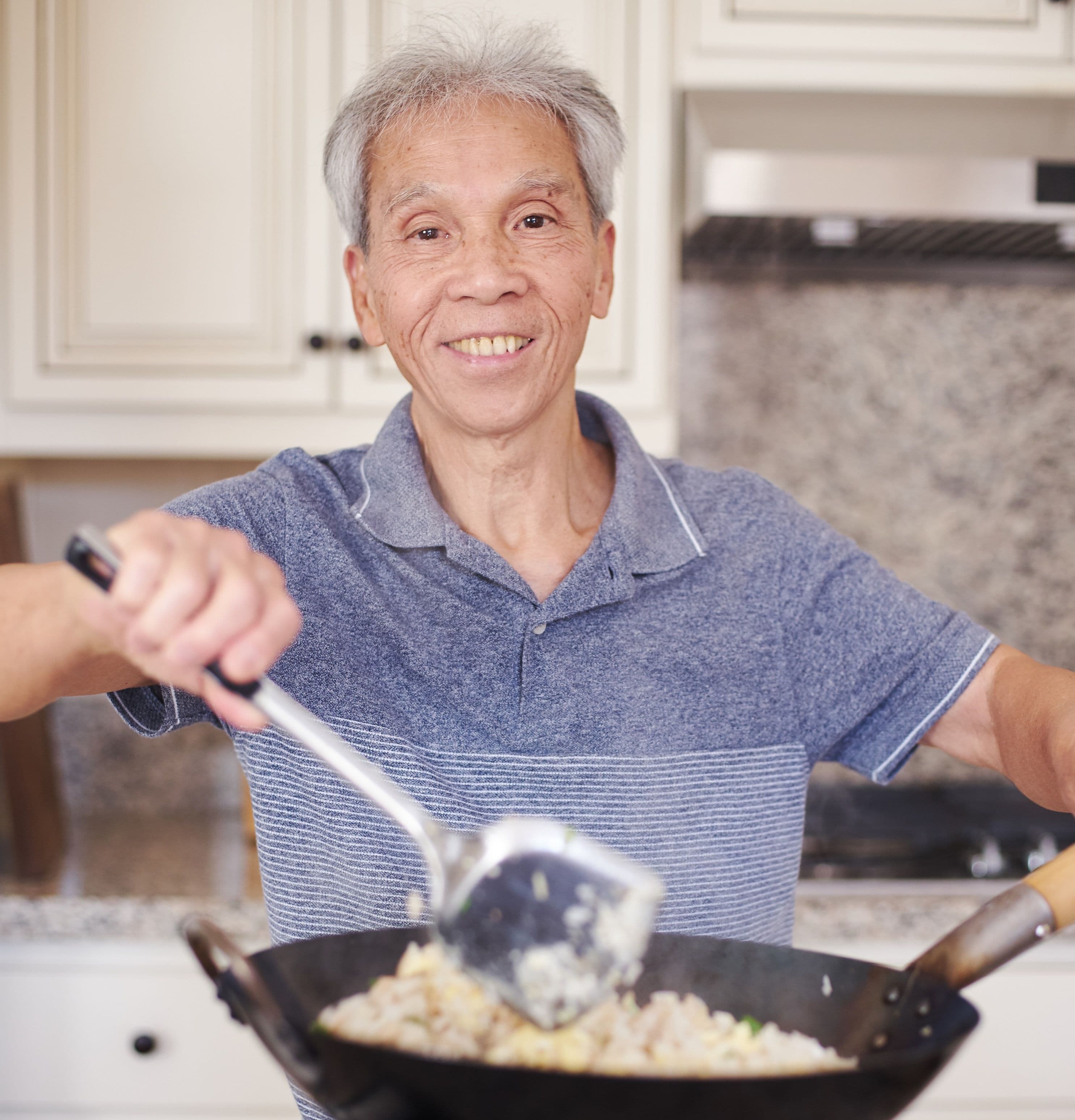
Soothe your soul with this leveled-up version of silky steamed eggs!

Cooking Summary
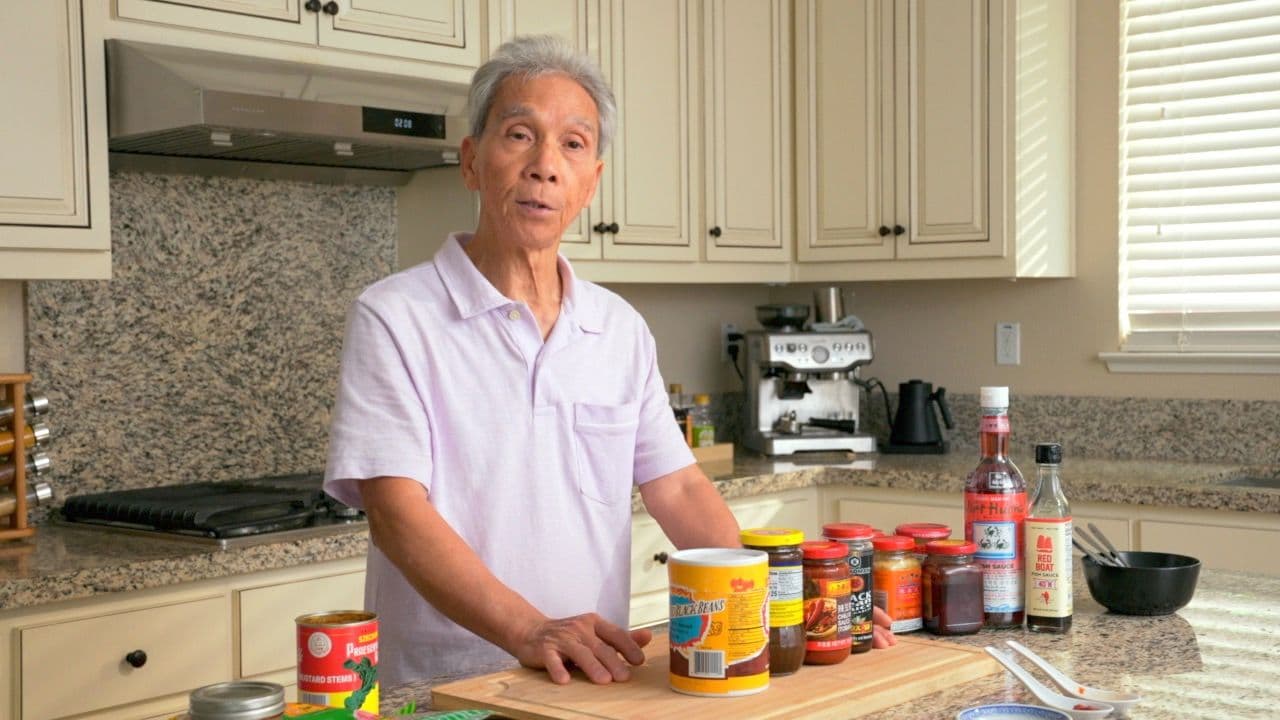
Ingredients: (detailed list)
- Main Ingredients: ground pork, egg, green onion
- Pork Marinade: cornstarch, oyster sauce, salt, white pepper, water, oil
- Egg mixture: salt, warm water
- Misc: oil
Jump To Section
Top 3 Mistakes
- Steaming the eggs for too long:
Watch the egg layer instead of extending the steaming time unnecessarily. Oversteaming creates little bubbles and air pockets, changing the smooth texture this dish should have.
- Starting with cold steam:
Bring the steaming water to the state specified before adding the dish. Starting too early changes the cooking time, so establish the steam before you begin counting minutes.
- Adding the egg layer too soon:
Give the pork its initial steaming stage before adding the egg layer. Follow the separate stages in the recipe instead of putting everything into the steamer at the same moment.
Overview
If you've tried our Steamed Egg recipe, try jazzing it up by adding more filling ingredients! One of our favorite ways to change it up is by adding a simple layer of minced pork. The layered result adds more texture, flavor, and body to the classic version of steamed eggs!
Ingredients
Why this recipe
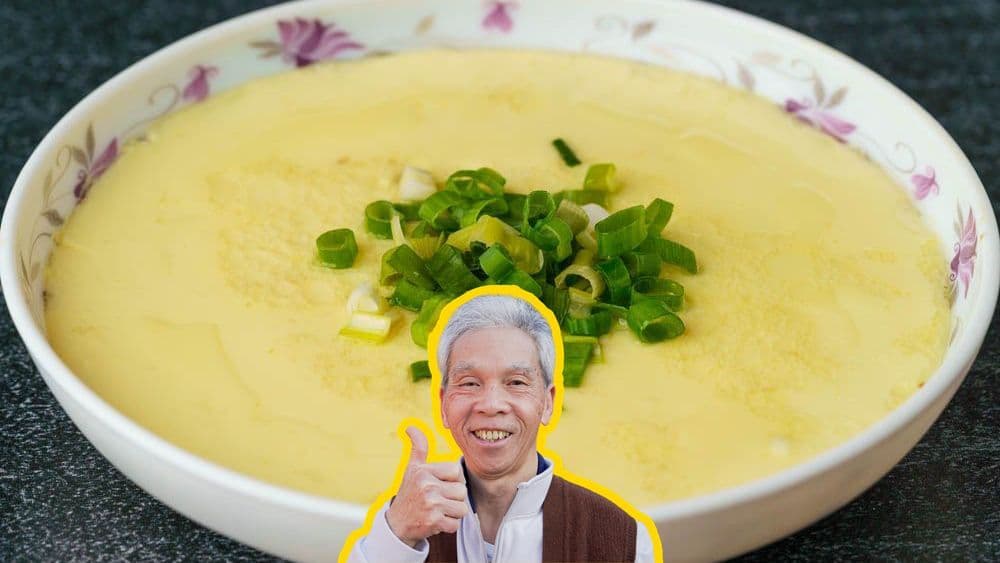
Most steamed egg with minced pork recipes online are tested only a handful of times. My dad used to make this dish multiple times a day, every day, for 60+ years and can make this in his sleep.
I know you'll love it as much as our community does! This recipe has over 273.5K views, 4.3K likes on YouTube.
Cantonese-style steamed eggs
Getting the firmness and texture of steamed eggs just right comes easily to my dad, but that's not quite the case with the rest of us! As a general rule, the best ratio that results in a medium firm texture that our family prefers is a 1.5:1 water to egg ratio. In our video, that means 9 fl oz of water to 3 eggs.
In order to get a silky texture, there are a few things to keep in mind.
- Mix warm water into the eggs. Don't use cold water, and don't use hot water.
- Don't overcook the eggs. When it firms up to the slightest jiggle, it's done. Oversteamed eggs will form textured, tiny bubbles and air pockets.
- Optionally, pour the eggs through a fine mesh sieve when you add it to the pork.
Safety tip
My dad has scary magic hands and can simply lift hot dishes out of a steamer without burning his fingers. The rest of us mortals can exercise some more caution and use some nifty tools to protect ourselves.
Many Cantonese households that often make steamed dishes keep a plate lifter in the kitchen. They're a cross between claws and tongs. To use it, place your palm over the top of the gadget, hook your thumb over the rung on one side, and hook your index and third finger over the rung on the other side. You'll be able to open and close the lifter as you open and close your hand.
Open the lifter wide enough to fit over the opposite edges of the dish, then close to clamp around it. Now you can gently lift and move the dish in and out of scary steamers!
With this lifter, your hand and arm are still going to be over the dish and any wafting steam, so be quick when you're hovering over the steamer.
You can find this in the kitchen accessories section of most Chinese grocery stores. If you can't find it near you, you can purchase it on Amazon here.
Otherwise, you can also use oven mitts. Just be careful not to dip them into the steaming water!
How to make Steamed Egg with Minced Pork
In a small bowl, make the marinade by mixing together cornstarch (1 tbsp), oyster sauce (1 tbsp), salt (0.50 tsp), white pepper (0.25 tsp), and water (2 tbsp). Add the ground pork (5 oz) and mix thoroughly to coat.
Once the meat is well combined with the marinade, add oil (1 tsp) and stir to combine.
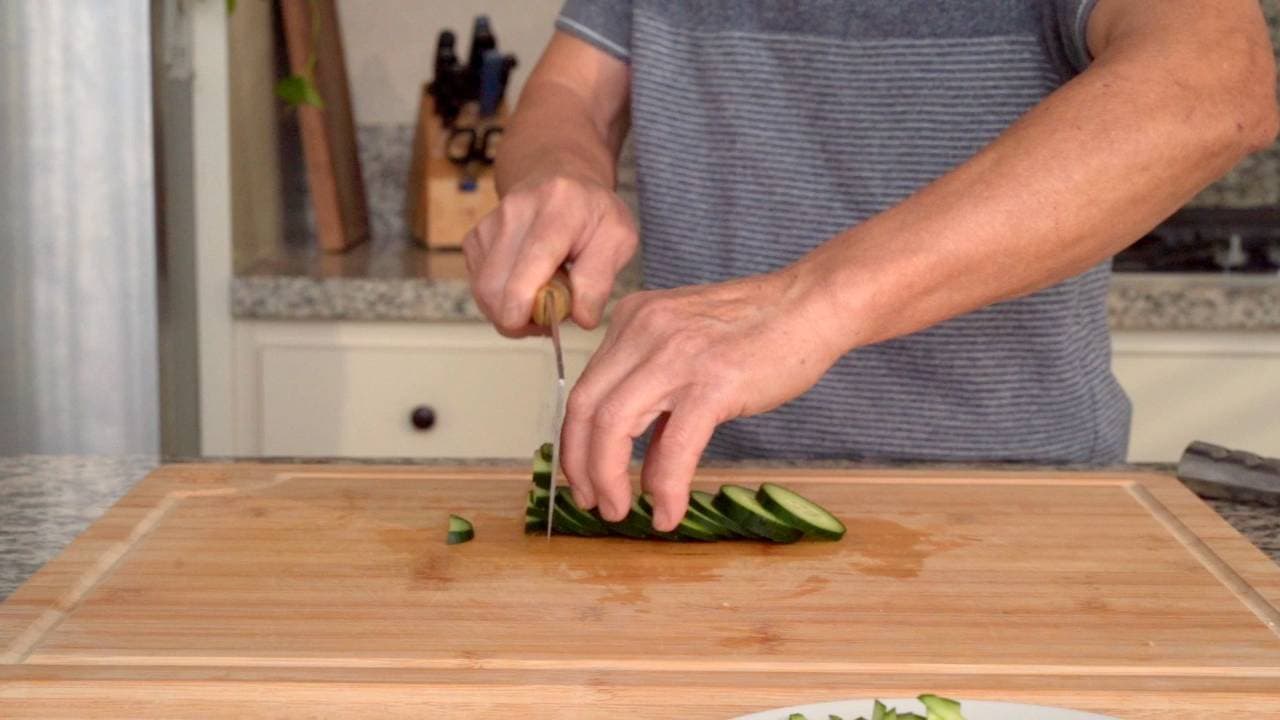
Finely chop the green onion (1 stalk). This will be for garnish, and you don't want to be sprinkling large, astringent surprises over your dish.
Crack eggs into a measuring cup or a medium-sized bowl. Beat them well until homogeneous. There should not be any noticeable streaks of egg white or yolk.
Season the beaten eggs with salt (0.50 tsp). Add warm water (9 fl oz). Make sure it's not too hot, or it will start cooking the egg and the texture will turn out weird and lumpy. The ratio of water to egg should be approximately 1.5:1, though you can adjust it with slightly more water for a more tender result, or with slightly less water for a firmer texture.
Stir gently to combine.
Choose a flat dish with steep walls that are an inch or so deep. It can be any heat-safe material. Stainless steel conducts heat better, so the food will cook slightly faster. Ceramic and porcelain are slower at conducting heat, and retain heat better, so the food will take longer to cook through but will cook more evenly.
Once you have found a suitable dish, spread oil (1 tsp) all around the bottom and sides to prevent the pork and egg from sticking. Then, transfer the marinated pork to the dish and spread it evenly to create a thin, flat layer along the bottom of the dish.
Set up a pan or wok with a steamer rack and enough water to reach the steamer rack. To save time, you can boil the water ahead of time in a kettle.
It's your personal choice whether to add enough water to touch the dish, or to go just below the dish. If the water touches the dish, everything will cook faster, but there's a higher risk of the water boiling up and into the dish. If the water is below the dish, everything will take longer to cook. Either way, make sure to have enough water so that it will not all boil off to leave you with a dry pan or wok!
Once the water in the wok has come to a boil, place the dish of meat onto the steamer rack, cover the wok with a lid, and steam it for 3-5 minutes on medium heat--hot enough to keep the water steaming nicely, but not too hot that the water is wildly turbulent. The pork should come out about 80% cooked. A good indicator to look out for is when juices start forming.
When the pork is about 80% cooked through and you can see some liquid pooling around it, it's time to add the egg layer.
Give the egg mixture a quick stir and uncover the lid.
Gently pour the egg all over the layer of pork. Pour slowly so it doesn't splash out. For a smoother, silkier texture, you can optionally pour it through a mesh sieve or strainer.
To prevent condensation from dripping from the lid down into the dish, use plastic wrap or a plate to cover the dish. Then cover with the lid.
Steam for an additional 5-6 minutes on medium heat. Then, turn off the heat and let the residual heat continue the cooking for another 3-4 minutes.
Throughout the cooking process, keep an eye on the water and lower the heat if it boils too vigorously, or raise the heat if there's not enough steam to cook.
You'll know it's done when the egg has firmed up and doesn't jiggle too much. If it's very jiggly and still watery, steam for another minute on medium heat, then turn off the heat and steam it until it's firm.
Carefully lift the dish out of the steamer. Use oven mitts or a plate lifter to help.
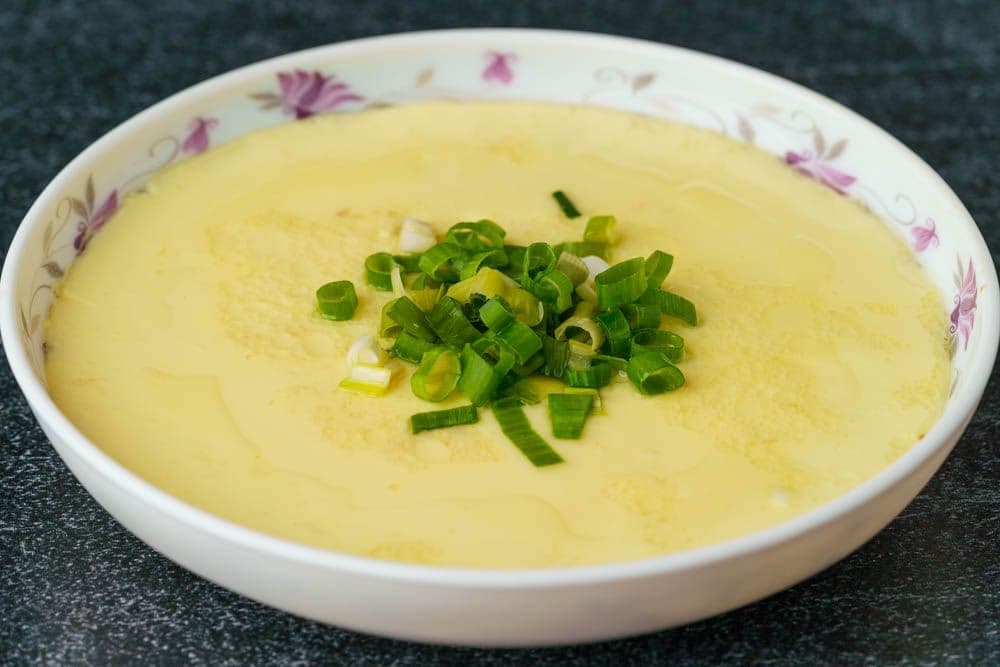
Garnish with the chopped green onion, and serve. Enjoy!
Frequently Asked Questions
What kind of dish should I steam eggs in?
For Cantonese-style steamed eggs, we want a soft, silky Jell-o-like consistency that's evenly cooked. The ideal shape is a flat dish with walls that are about an inch deep.
Preferably, don't steam in a round bowl. The heat will not reach all of the ingredients evenly.
Any heat-safe material will steam safely. Stainless steel conducts heat better, so the food will cook slightly faster. Ceramic and porcelain are slower at conducting heat, and retain heat better, so the food will take longer to cook through but will cook more evenly.
How do you keep steamed egg from sticking to the plate?
Before steaming, prepare the dish by greasing with a small amount of oil. Make sure to spread the oil all around the bottom and walls of the dish.
Additionally, don't overcook the egg. Overcooked steamed eggs are more likely to stick and cling to the plate.
How do you properly cook the layer of pork under steamed eggs?
Steam the pork on its own first, as a thin patty at the bottom of the dish. When it's about 80% done, add the egg mixture and continue cooking by steaming the whole thing.
For guidelines on how long each steaming step takes, check out the instructions in our recipe above.
How do you get steamed egg silky without bubbles?
Bubbles and rough texture are a result of oversteamed, overcooked eggs.
For a smooth, silky texture on your steamed eggs, follow these tips:
- Mix warm water into the eggs.
- Don't overcook the eggs. Oversteamed eggs will form textured, tiny bubbles and air pockets.
- Start steaming on medium heat, and finish steaming with the heat turned off.
- Optionally, pour the eggs through a fine mesh sieve when you add it to the pork.
Is steamed egg with pork safe for babies to eat?
Yes! It's a lovely, soft texture that's great for babies getting used to solids. Treat the steamed egg like tofu and feed with a spoon, or serve as a preloaded spoon. The minced pork portion should be cut up into appropriately sized pieces. Always monitor when your child is eating to reduce the risk of choking.
Pairs well with
View all →

Made with love ❤️
We started Made With Lau to celebrate Cantonese culture and honor the legacy of our wonderful parents, Jenny and Chung Sun Lau.
Our hope is that these recipes and stories help you spread the joy, love, and nostalgia that I felt growing up.