Soy Sauce Chicken
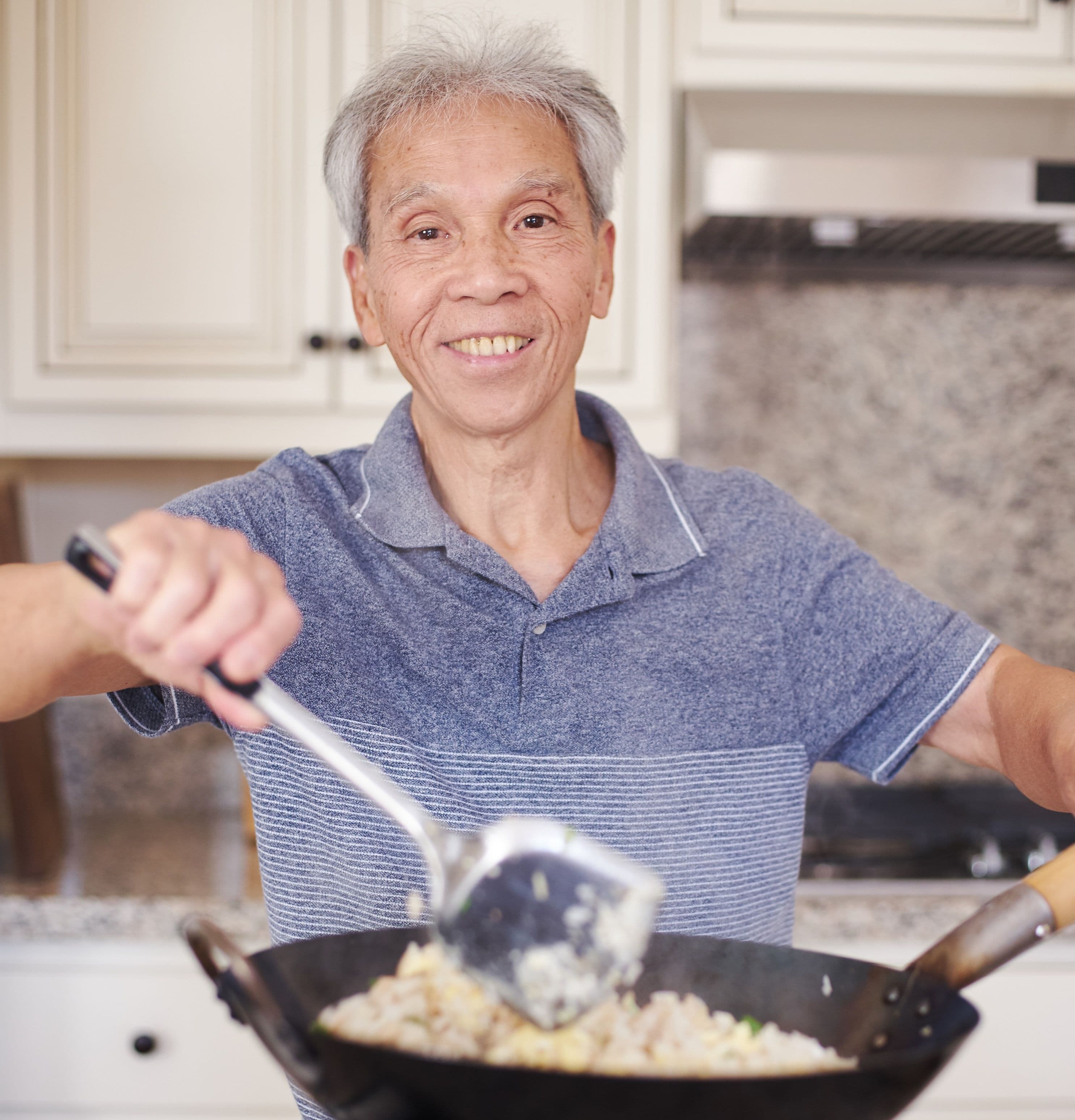
An easy-to-follow recipe for a succulent whole chicken to jazz up your table!

Cooking Summary
Ingredients: (detailed list)
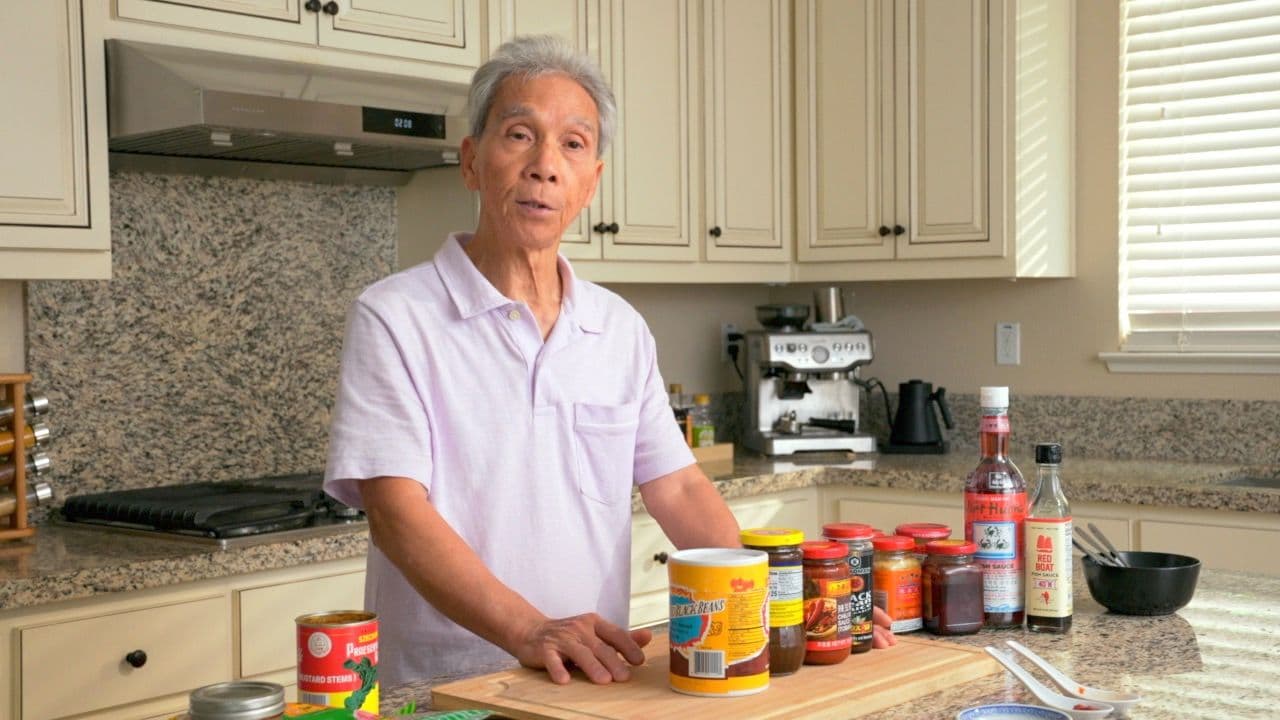
- Main Ingredients: chicken, star anise, green onion, ginger, shallot, oil, Kikkoman® Sesame Oil
- Seasonings: rice wine, Kikkoman® Soy Sauce, Kikkoman® Tamari Soy Sauce, boiling water, rock sugar
- Slurry: cornstarch, water
- Miscellaneous: ice
Jump To Section
Top 3 Mistakes
- Skipping the bagged ice:
Cool the cooked chicken between bags of ice before carving. The bags keep melting ice from diluting the flavor, while the quick cooling stops residual heat from continuing to cook the meat.
- Adding thickener too fast:
Add the starch mixture gradually while stirring, checking the texture as it thickens. Pouring it all in at once gives you less control over the final consistency of the sauce.
- Boiling the chicken too hard:
Follow the recipe’s gentle heat for the chicken rather than maintaining a vigorous boil. The controlled cooking method is part of keeping the meat tender instead of tightening it up.
Overview
Have you seen those glistening brown soy sauce chickens hanging in the window? Yes, this recipe is for that! It's less complicated than you might think, and even tastier.
The best thing about making a whole soy sauce chicken is that it's the freshest one you'll ever have, which means it'll be the juiciest, most succulent one you'll ever taste.
Also, you get a bonus: that entire pot of soy sauce used to slowly cook the chicken, which is going to be infused with the flavors of the chicken and spices? That's yours to keep and enjoy!
Thank you, Kikkoman!
This recipe is brought to you in part by Kikkoman. My dad has been using Kikkoman flavors throughout his 50-year career as a chef, and it's a privilege to get to partner with them on such an iconic recipe, Soy Sauce Chicken!
- Kikkoman products are a major flavor enhancer and bring out the “umami” taste, and helps balance and round out flavors
- Kikkoman® Less Sodium Soy Sauce is perfect for home cooks who are looking to cut down on their sodium levels, without sacrificing flavor
- Kikkoman offers wide range of Gluten-Free Asian sauces, including Gluten-Free Oyster Sauce and Gluten-Free Hoisin Sauce
- The KikkomanUSA.com Chinese site offers easy Asian recipes that home cooks can enjoy any night of the week
You can learn more about Kikkoman and follow them on social media here:
- Website: https://www.KikkomanUSA.com
- Facebook: https://www.facebook.com/KikkomanChineseUSA (Kikkoman 萬字在美)
- Instagram: https://www.instagram.com/kikkomanusa_chinese/ (Kikkoman 萬字在美)
Ingredients
Why this recipe
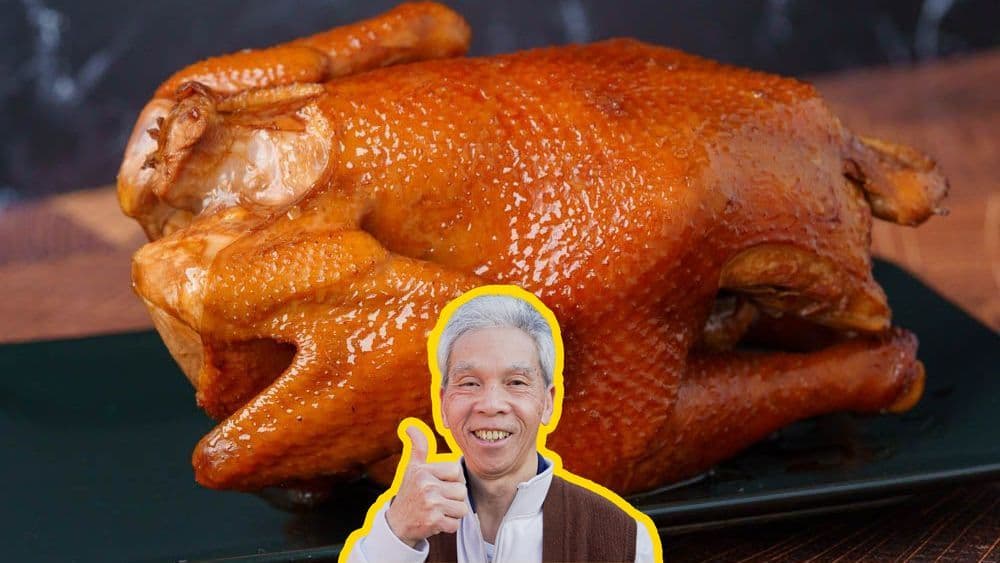
Most soy sauce chicken recipes online are tested only a handful of times. My dad used to make this dish multiple times a day, every day, for 60+ years and can make this in his sleep.
I know you'll love it as much as our community does! This recipe has over 3.4M views, 45.5K likes on YouTube.
Preparing the chicken
Daddy Lau washes the chicken. It's a habit that lots of people have, but is it helpful, or necessary?
From a food safety perspective, it's actually not a great idea. There may be some undesirable bone shards or stringy bits to get off of the chicken, but washing chicken (or other raw meats) is not recommended, because it spreads bacteria as the water splashes around the cooking area and onto your clothing. Cross contamination raises the risk of foodborne illness.
If you do rinse the chicken, be very aware of splashing, and make sure to wipe down and disinfect your cooking area, including your sink, faucets, counters, and bowl and containers that you may have touched while washing the chicken.
If you're worried about germs on the meat, what's important is actually getting the meat to the right temperature. Daddy Lau's test for clear vs red liquid at the end of cooking is a great indicator that the chicken is cooked through. Or, you can use a food thermometer to be super safe. The USDA recommendation is for cooked chicken to reach an internal temperature of 165ºF (75°C).
Leftover soy sauce
The chicken cooks low and slow in a simmering pot of soy sauce (and aromatics and spices, of course). We thicken some of it to pour over and serve with the chicken, but there's still plenty left! Don't let this amazing liquid go to waste. Use it as a condiment or to season other dishes that call for soy sauce.
Finding Asian Ingredients
Some of these ingredients are hard to find in a typical grocery store.
If you don't live near an Asian market, most or all of what my dad uses in this recipe can be found on Amazon:
- Kikkoman Sesame Oil - https://geni.us/kkmsesameoil
- Kikkoman Soy Sauce - https://geni.us/kkmsoysauce
- Kikkoman Tamari - https://geni.us/kkmtamari
- Kikkoman Oyster Sauce - https://geni.us/kkmoystersauce
- Shaoxing Cooking Wine
- Ground Bean Sauce
How to make Soy Sauce Chicken
Daddy Lau likes to start by washing the chicken, but this step is optional! If you do wash your chicken (4 lb), focus on rinsing inside the breast and getting debris out of the cavity. Afterwards, thoroughly wipe down and disinfect any surfaces that came into contact with the raw chicken, or may have had some water splash, to reduce the risk of cross-contamination.
Let the chicken drain, and then place into a large pan or dish.
Pour boiling water onto the chicken to slightly blanch it. The skin will tighten up and crisp up easier later. This also rinses away some of the surface fattiness, allowing the chicken to better take on color from the sauce.
Put the chicken in a bowl, with the cavity opening down, to drain.
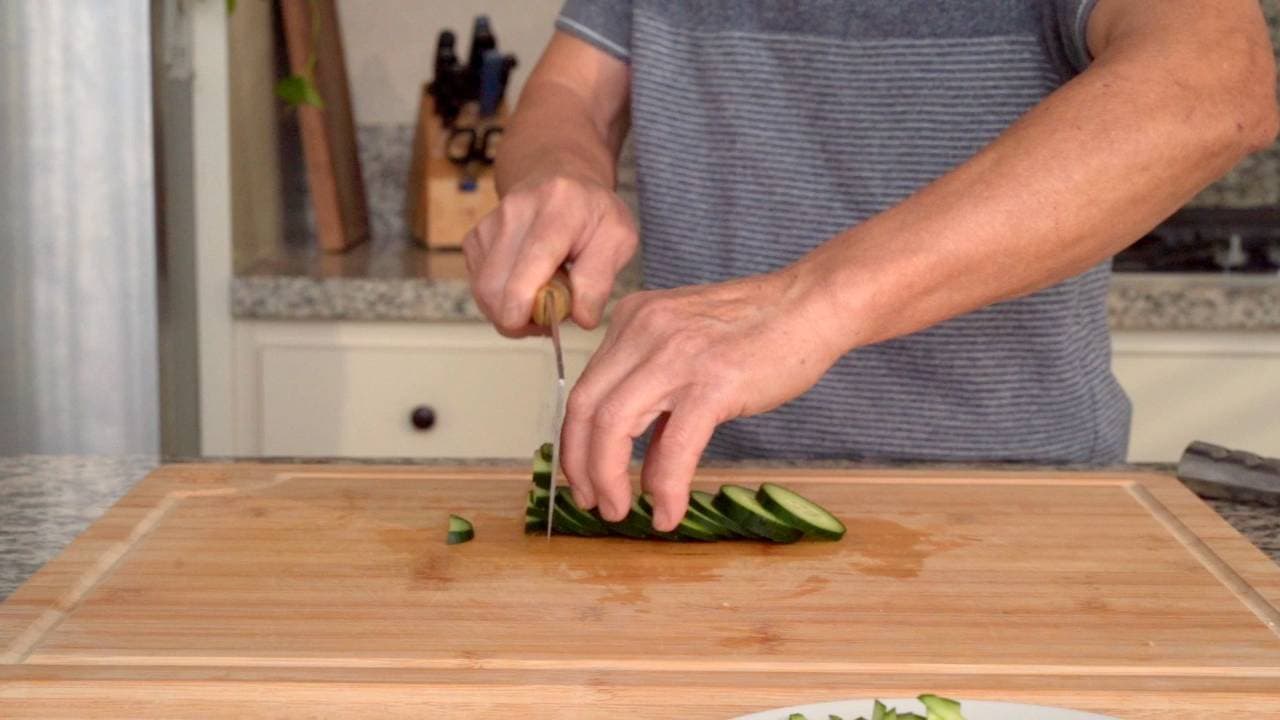
Break the star anise (3 piece) into smaller pieces. To prevent pieces from flying everywhere, wrap the star anise in a paper towel, and then smack them with the side of a heavy knife.
Cut the green onions (3 stalk) into thirds, or long batons.
Cut the ginger (1 oz) into slices.
Cut the shallots into quarters.
Heat the wok on high heat. Add oil (2 tbsp).
Add the ginger, and fry for 20 seconds.
Add the shallots, and fry for 20 seconds.
Add the crushed star anise, and fry for 10 seconds.
Add the green onion, and fry for 10 seconds.
It should smell pretty amazing now.
Add sauces
Pour in rice wine (3 tbsp) and stir it in. Be careful of splatters!
Add Kikkoman® Soy Sauce (12 oz) (light soy sauce), and cook for 30 seconds.
Then add boiling water (16 oz), and cook for 30 seconds.
Add rock sugar (3 oz), and cook for 30 seconds.
Add Kikkoman® Tamari Soy Sauce (6 tbsp) (or your dark soy sauce of choice) and cook for 20 seconds. Add the rest of the rice wine (3 tbsp).
Turn the heat to low and cook for 2-3 minutes, until the sugar has fully dissolved.
Transfer chicken to a larger pot. It should be deep enough so that the chicken will be at least half-submerged in the sauce. Pour the sauce carefully in, and bring it all to a simmer on low heat. Keep the chicken soaking in the simmering sauce for 15 minutes with the lid on.
Then, carefully flip the chicken over and place the lid back on, and soak, covered, for about 15 minutes, still on low heat.
If the chicken is smaller, it may be cooked through at this point. If it is larger, like ours at 4 lbs, flip it one more time and cook for an addition 10 minutes, again on low heat with the lid on.
Check for doneness by poking a chopstick into the thickest part of the chicken. If the juices run clear, it's ready. If there is any redness in the liquid, it's not cooked through yet. Otherwise, you can use a food thermometer to check for an internal temperature of 165ºF (75°C).
When the chicken is fully cooked, it needs to cool down as fast as possible so that it doesn't keep cooking from its own residual heat. Prepare a large bowl with a bag of ice (1 gallon bags) on the bottom. The bag prevents melting ice from diluting the chicken.
Transfer the cooked chicken onto the ice, and then place a second bag of ice (1 gallon bags) on the top. Let the chicken cool this way for 10-20 minutes before cutting into it.
While waiting for the chicken to cool, bring the soy sauce to a boil. This will make it last longer and you can reuse it for other dishes, or to make more soy sauce chicken. We'll only be using 3 ladlefuls of it for this dish, so store the rest of it somewhere safe.
Get to carving! If you haven't taken a cooked chicken apart before, just take it section by section.
You don't need a particularly heavy knife for this, as chicken bones are hollow and not very dense. It's perfectly safe and effective to slice through where you can, and when that's not enough pressure, to set your knife on the chicken where you want to cut and then help push down with your other hand.
Remember to put each section back to recreate the whole chicken.
Chop the chicken in half lengthwise to get two symmetrical halves.
Cut along the joint to separate the wing. Then, pull the thigh away from the body and cut it off. You'll end up with the drumstick and thigh in one piece, separated from remaining body, which is mostly breast. Cut that in half lengthwise, and then chop each half into 1-inch wide pieces.
Cut the drumstick away from the thigh, and chop both of those parts into 1-inch pieces as well.
Also, separate the wing tip from the chicken wing.
Repeat this process with the other half of the chicken.
Add 3 ladlefuls of our soy sauce from earlier into the wok. Turn the heat on high and let it come to a boil.
Meanwhile, prepare a slurry with cornstarch (2 tbsp) and water (4 tbsp). Mix thoroughly to dissolve all the cornstarch.
Turn the heat down to low and slowly pour in the slurry, stirring constantly to avoid lumps. You can add more or less slurry according to your own preferences.
Add sesame oil (1 dash) to taste. It's better to add a little bit, taste, and then add a touch more if needed, as sesame oil is very potent! When you're happy with it, ladle the sauce over the chicken, making sure every piece gets some sauce.
Enjoy!
Frequently Asked Questions
How do you get the flavor deep into the chicken?
The chicken will be soaking in a soy sauce-based liquid for at least 30 minutes. That'll be enough time for flavor to penetrate.
To help it along, don't skimp on the pour-over-blanching step. The hot water running over the surface of the chicken helps to remove surface fattiness which would otherwise impede penetration of the flavors and the color.
What type of chicken is best for Soy Sauce Chicken?
If you can get it, organic, free range chicken that have great flavor and texture to begin with would be the best choice! We recommend a smaller chicken, about 3 lbs, as handling it will be easier and it'll cook through faster. Of course, if you need a bit more meat than that, this recipe works great with 4-5 lb chickens as well.
If whole chickens are too much meat, or not something you're comfortable handling, you can definitely scale the recipe down to parts like thighs, drumsticks, or halves. Make sure to adjust the cooking time too.
How do you chop up the whole chicken?
It seems like a skillful, flashy affair when butchers go at a chicken with their huge cleavers, but it's definitely doable at home with some time and patience!
You don't need a particularly heavy knife for chicken, as chicken bones are hollow and not very dense. It's perfectly safe and effective to slice through where you can, and when that's not enough pressure, to set your knife on the chicken where you want to cut and then help push down with your other hand.
Remember to put each section back to recreate the whole chicken.
Chop the chicken in half lengthwise to get two symmetrical halves.
Cut along the joint to separate the wing. Then, pull the thigh away from the body and cut it off. You'll end up with the drumstick and thigh in one piece, separated from remaining body, which is mostly breast. Cut that in half lengthwise, and then chop each half into 1-inch wide pieces.
Cut the drumstick away from the thigh, and chop both of those parts into 1-inch pieces as well.
Also, separate the wing tip from the chicken wing.
Repeat this process with the other half of the chicken.
Can you reuse the braising soy sauce?
Yes! It's delicious and infused with spices and all that chickeny goodness. Save it to use as a condiment, in your recipes, or even to make another Soy Sauce Chicken!
Store it in the fridge for up to two weeks. If you somehow still have some left by the two week mark, you can boil it once more to extend its shelf life a bit.
How do you make Soy Sauce Chicken darker?
The coloring of Soy Sauce Chicken comes from dark soy sauce. If you don't see the color that you're looking for, you can add more! It's not a particularly salty ingredient, and some recipes add up to 20 tbsp, or 1.25 cups of dark soy sauce for their 4-5 lb chicken.
To make sure the chicken soaks up color evenly, don't skimp on the pour-over-blanching step. The hot water running over the surface of the chicken helps to remove surface fattiness which would otherwise impede penetration of the flavors and the color.
Pairs well with
View all →
Made with love ❤️
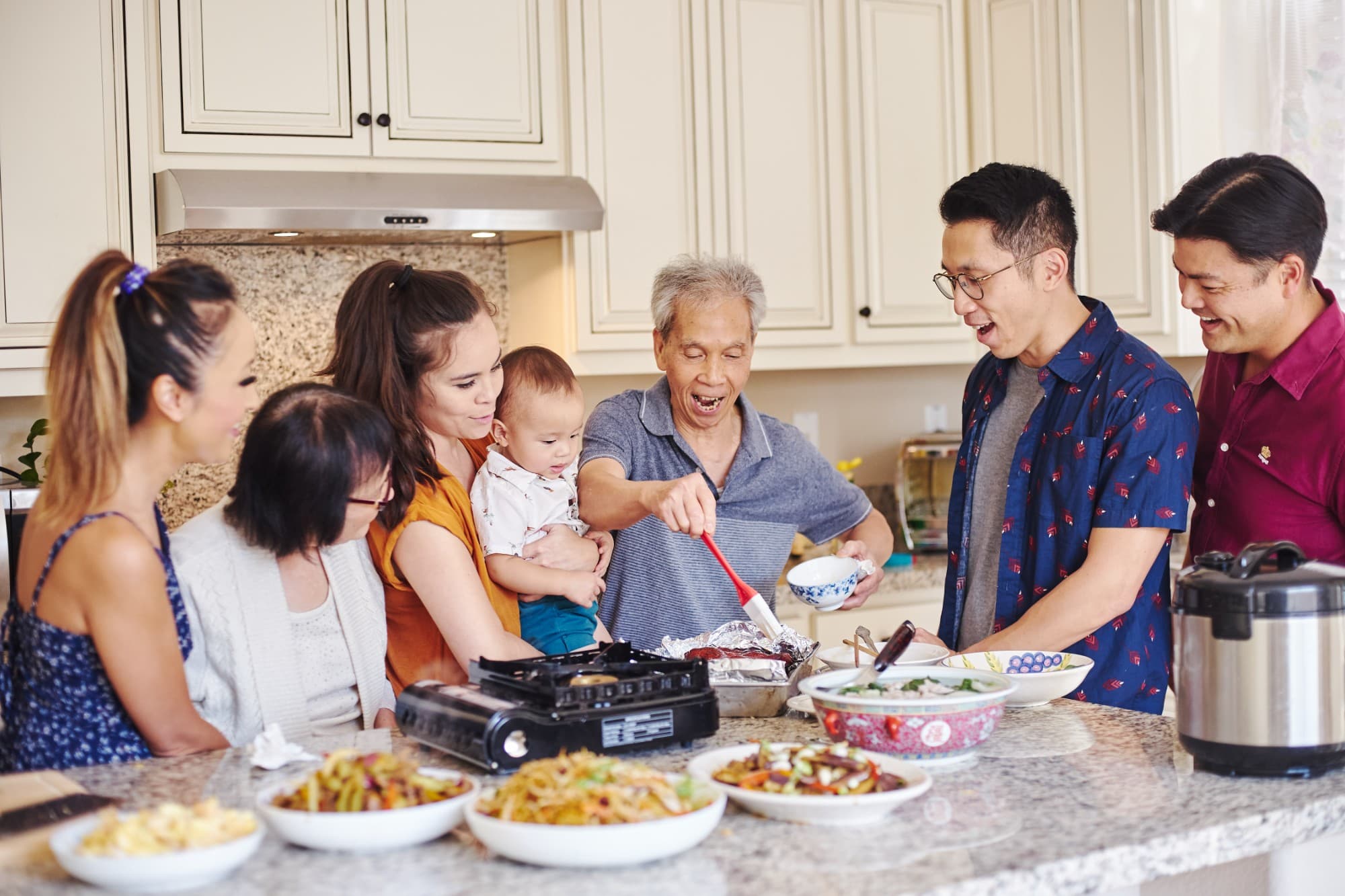
We started Made With Lau to celebrate Cantonese culture and honor the legacy of our wonderful parents, Jenny and Chung Sun Lau.
Our hope is that these recipes and stories help you spread the joy, love, and nostalgia that I felt growing up.